Ramya Poshak
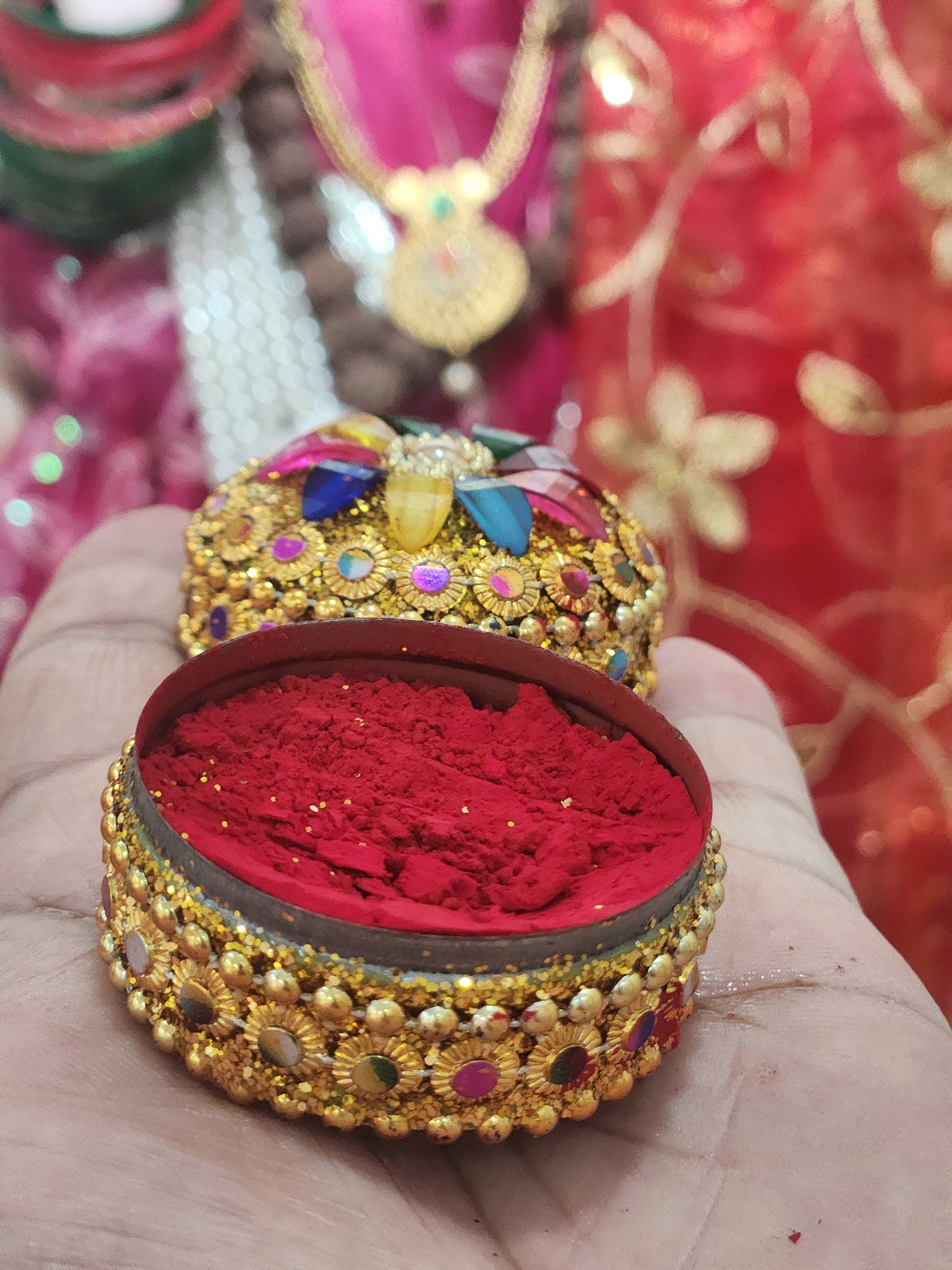
Red Sindoor
Red Sindoor
Couldn't load pickup availability
Red sindoor, a vibrant vermilion powder, holds profound significance in Hindu traditions as a sacred symbol worn by married women along the hair parting. It embodies marital devotion, divine energy, and protection, with its striking red hue representing life force, passion, and fertility.
Cultural Importance
Sindoor marks a woman’s marital status, applied by the groom during the wedding ritual known as Sindoor Danam, signifying the start of married life and lifelong commitment. Rooted in ancient texts like the Ramayana and Rigveda, it dates back over 5,000 years, as evidenced by Indus Valley artifacts showing red markings on female figurines. This tradition fosters cultural continuity, visually declaring a woman’s role in family and society.
Spiritual Value
The red color links sindoor to Goddess Shakti or Parvati, invoking her blessings for prosperity, fertility, and husband protection from evil. Positioned above the Ajna chakra, it channels intuition, strength, and feminine energy (Shakti), promoting spiritual harmony and auspiciousness. Hindu beliefs hold that consistent application ensures marital bliss and divine safeguarding.
Medicinal Benefits
Traditional sindoor, made from turmeric, lime, or herbal mixes, offers Ayurvedic properties like improved blood circulation, hormonal balance, and pituitary gland stimulation for vitality. Ingredients such as turmeric act as antiseptics, while historical formulations with mercury were thought to regulate blood pressure and mental well-being, though modern herbal versions prioritize safety.
Social Significance
Sindoor publicly signals a woman’s married status, deterring advances and emphasizing her devotion, thus upholding social norms of fidelity and family honor. It enhances feminine grace and respect as Shakti’s embodiment, reinforcing community values of love, strength, and protection in Hindu society.
Share